The horrific scenes this summer from the Mediterranean have confirmed in graphic detail the devastating consequences of global warming. Here in the UK we cannot be complacent. Extreme patterns of weather, in the form of summer storms with winds exceeding 50 mph, flash flooding, periods of extreme drought with temperatures exceeding 30 degrees Celsius are no longer rare occurrences. It is now widely accepted that this is man made, caused by the release into the atmosphere of carbon dioxide (CO2).
Carbon dioxide comes from both natural sources eg volcanoes, the breath of animals and plant decay and
human sources, primarily the burning of fossil fuels such as coal, oil and natural gas to generate energy. Developing other sources of energy generation, eg wind, solar and hydro power will reduce the amount of CO2 produced in the first place. But CO2 will never be eliminated. Reducing the amount of carbon released into the atmosphere is therefore essential if we are to successfully combat climate change.
Using technology to capture and store carbon to prevent its release will be costly but fortunately there is another cheaper option. The humble tree is nature’s way of solving this problem.
How much carbon does a tree store? Forestry England, a division of the Forestry Commission, have helpfully published a simple guide to enable us to make the calculation. We can therefore see that, for example, a Celtic Maple (previously known as the Sycamore) with a circumference of 150cm is storing 1 tonne of carbon and throughout its lifetime will have absorbed 3.75 tonnes, and an Oak with a circumference of 250cm will be storing 3.82 tonnes and throughout its lifetime will have absorbed 14 tonnes.
Tree planting is therefore a key part of the Government’s plan to combat climate change and achieve net zero carbon emissions by 2050. The UK’s target is to plant 30,000 hectares of new woodland each year by 2025. The majority of trees to be planted to achieve this target will be whips, small one year old saplings. However, it is not until about 30 years into its growing cycle that a tree begins locking away amounts of carbon at a significant level to begin to mitigate the effects of climate change. This makes it even more essential that we look after our mature trees that are already storing tonnes of carbon.
Here in Witham we are blessed with many superb mature trees, many protected, rightly so, with Tree Protection Orders (TPOs). Now more than ever must we ensure that no healthy mature tree is felled without very good reason.
Perhaps by chance rather than design, Witham is also very much in tune with Government policy on woodland creation. A little over 30 years ago the Town Council purchased a 14-acre (5.67 hectares) plot of land to the east of the town and with funding from the Forestry Commission planted a community woodland. James Cooke Wood is now maturing into a fine asset and beginning to have a serious impact on mitigating climate change as well as providing an area of quiet relaxation for local people. The woodland was planted using British trees local to the area to a design by the late and greatly missed Mel Crowe, at the time Tree Officer at Braintree District Council. Areas of open grassland within the wood also provide a wide range of habitats for birds, butterflies and other wildlife in which to flourish.
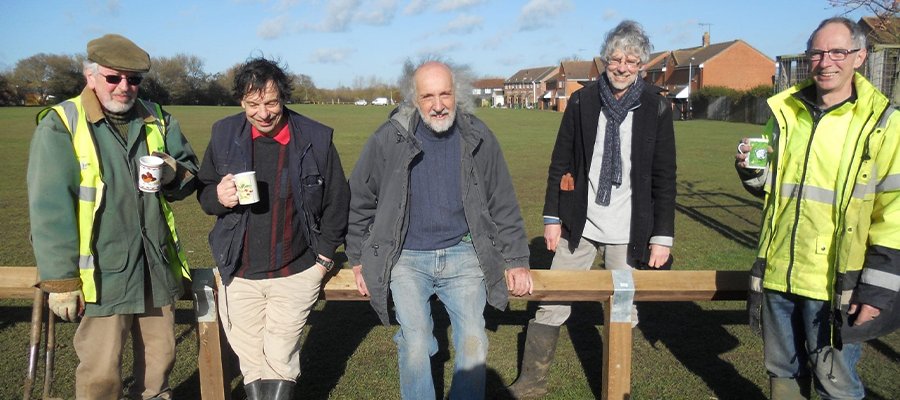
For the past ten years the Witham Tree Group has been doing its best to add to the tree cover of our town. We are now planting each year around 70 semi mature trees. Our principal supplier, Barcham Tree Nursery, produce trees with a root structure that is not spiralled or tangled as is often the case in container grown plants. This enables the trees to establish quickly. Some of our earlier plantings now have a girth that is such as to suggest that they are already locking in significant amounts of carbon.
It is not only their carbon capturing abilities that trees are of value in a residential environment. They release oxygen and help filter pollutants from the atmosphere. And of course, in our increasingly hotter summers, they provide essential shade.
The value of trees cannot therefore be underestimated.
Allan Waight
September 2023