Tree Talk
The ‘Lynfield’ Elm
Having resisted the ravages of Dutch Elm disease that has seen many of its relations, particularly here in East Anglia, wiped off the landscape, the Lynfield Elm, as it is affectionately known, now faces its biggest challenge yet. How to respond to the threat of the chainsaw. An impossible task? Maybe not….. This grand old tree stands on a traffic island that separates traffic leaving and joining the A12 at Junction 21. Part of its crown is dead and fungus has been found at its base that is likely to weaken the tree causing it to become unstable. Not an ideal state to be in for a tree so close to a busy road. It is being removed, perhaps only a little before its time therefore, as part of a major redesign of the road layout. It is close by an extensive housing development that will benefit from the revised layout. On hearing the news of its planned removal, but before the health of the tree was fully understood, many objections poured in to the authorities pointing out the tree’s prominent location and, importantly, unique value as an elm that has demonstrated an ability to resist Dutch Elm disease. A feasibility study commissioned to assess its suitability for lifting and transplanting concluded, perhaps not surprisingly, that the tree cannot be satisfactorily relocated. Elms regenerate from root suckers that are genetically the same as their parent, which means, in this case, retaining the resistance to Dutch Elm disease. An assessment by specialists identified a number of these suckers suitable for lifting and transplanting. But doing so successfully needs specialist skills and techniques. These will be applied by experts to lift and nurture several suckers that will be transplanted, when ready, to new sites nearby with space to grow and develop without the need for pruning. The plan is to plant the young trees in two groups of three. In such groupings, roots eventually grow together sharing nutrients helping the grouping thrive. This plan may not have been developed had the Town Council, Witham Tree Group, Witham and Countryside Society and scores of residents not raised objections to the original plan to fell such an important rare tree with resistance to Dutch Elm disease. The ‘Lynfield’ Elm will live on therefore through its offspring. Allan Waight November 2023
The value of trees to the Community
There is, hopefully, a growing acceptance of the value of trees in the context of global warming. But trees also have a value to local communities that is yet to be fully appreciated. When local councils cut down trees without a proper understanding of the feelings of the local community they are surprised by the reaction, as happened in Sheffield and Plymouth. And the widespread condemnation of the recent senseless vandalism that has seen the destruction of the iconic Sycamore by Hadrian’s Wall must surely not be dismissed as a mere emotional outburst by a bunch of tree huggers. Every action has a consequence, and it is sometimes helpful to quantify that consequence by giving it a monetary value. Capital Asset Valuation of Amenity Trees (CAVAT) is a method by which a monetary value of the amenity value of a tree can be calculated. Knowing the value of a tree in this way can be particularly helpful in urban situations, as here in Witham, where several trees are subject to a Tree Protection Order (TPO). Trees protected in this way cannot be pruned or felled without planning permission. But a TPO protects in other ways. A developer of a site on which there are protected trees must ensure that building activity is conducted in a manner that will not adversely impact the continued well being of those trees. A developer who causes a protected tree to die either by wilful or negligent damage caused by building activity should therefore face penalties. In such cases the CAVAT system is available to Local Authority Tree Officers to secure adequate and appropriate financial compensation. Here in Witham we have a number of developments taking place in and around our town.The Witham Tree Group are monitoring this development activity and will draw to the attention of our local authorities any case where we believe that building activity is having a detrimental impact on protected trees. Allan Waight October 2023
The value of trees in the battle against climate change
The horrific scenes this summer from the Mediterranean have confirmed in graphic detail the devastating consequences of global warming. Here in the UK we cannot be complacent. Extreme patterns of weather, in the form of summer storms with winds exceeding 50 mph, flash flooding, periods of extreme drought with temperatures exceeding 30 degrees Celsius are no longer rare occurrences. It is now widely accepted that this is man made, caused by the release into the atmosphere of carbon dioxide (CO2). Carbon dioxide comes from both natural sources eg volcanoes, the breath of animals and plant decay and human sources, primarily the burning of fossil fuels such as coal, oil and natural gas to generate energy. Developing other sources of energy generation, eg wind, solar and hydro power will reduce the amount of CO2 produced in the first place. But CO2 will never be eliminated. Reducing the amount of carbon released into the atmosphere is therefore essential if we are to successfully combat climate change. Using technology to capture and store carbon to prevent its release will be costly but fortunately there is another cheaper option. The humble tree is nature’s way of solving this problem. How much carbon does a tree store? Forestry England, a division of the Forestry Commission, have helpfully published a simple guide to enable us to make the calculation. We can therefore see that, for example, a Celtic Maple (previously known as the Sycamore) with a circumference of 150cm is storing 1 tonne of carbon and throughout its lifetime will have absorbed 3.75 tonnes, and an Oak with a circumference of 250cm will be storing 3.82 tonnes and throughout its lifetime will have absorbed 14 tonnes. Tree planting is therefore a key part of the Government’s plan to combat climate change and achieve net zero carbon emissions by 2050. The UK’s target is to plant 30,000 hectares of new woodland each year by 2025. The majority of trees to be planted to achieve this target will be whips, small one year old saplings. However, it is not until about 30 years into its growing cycle that a tree begins locking away amounts of carbon at a significant level to begin to mitigate the effects of climate change. This makes it even more essential that we look after our mature trees that are already storing tonnes of carbon. Here in Witham we are blessed with many superb mature trees, many protected, rightly so, with Tree Protection Orders (TPOs). Now more than ever must we ensure that no healthy mature tree is felled without very good reason. Perhaps by chance rather than design, Witham is also very much in tune with Government policy on woodland creation. A little over 30 years ago the Town Council purchased a 14-acre (5.67 hectares) plot of land to the east of the town and with funding from the Forestry Commission planted a community woodland. James Cooke Wood is now maturing into a fine asset and beginning to have a serious impact on mitigating climate change as well as providing an area of quiet relaxation for local people. The woodland was planted using British trees local to the area to a design by the late and greatly missed Mel Crowe, at the time Tree Officer at Braintree District Council. Areas of open grassland within the wood also provide a wide range of habitats for birds, butterflies and other wildlife in which to flourish. For the past ten years the Witham Tree Group has been doing its best to add to the tree cover of our town. We are now planting each year around 70 semi mature trees. Our principal supplier, Barcham Tree Nursery, produce trees with a root structure that is not spiralled or tangled as is often the case in container grown plants. This enables the trees to establish quickly. Some of our earlier plantings now have a girth that is such as to suggest that they are already locking in significant amounts of carbon. It is not only their carbon capturing abilities that trees are of value in a residential environment. They release oxygen and help filter pollutants from the atmosphere. And of course, in our increasingly hotter summers, they provide essential shade. The value of trees cannot therefore be underestimated. Allan Waight September 2023
The Drought Puts Trees in Danger
We water our trees for the first two years after they are planted. After that they should have their roots down and can normally be expected to look after themselves. However, the prolonged period of rainless heat which we are currently enduring has lowered the water table so much that even trees which have been in the ground for three years or more are suffering. We were surprised and saddened when we set off on our watering round last Thursday (14 July) to find that a number of the trees in the Memorial Park between Bramble Road and Honeysuckle Way which were planted in the 2019-20 planting season and watered throughout the spring and summer of 2020 and 2021 are showing signs of serious distress, having been apparently healthy the previous week. In response to this situation we watered all the trees in the Memorial Park. As mentioned in last week’s report above, it takes three bowser loads to water all the trees planted in the last two years. This is the most we have ever needed and, due to unavoidable team absences, we have struggled on a number of occasions this year to dispense more than two bowser loads. Last Thursday, however, we delivered a record four bowser loads to try to keep as many trees as possible alive. Fortunately we had an almost full team but even so it took us nearly four hot hours to complete the round. But we did not feel that even this was going to be enough and those of us who could make ourselves available returned on Saturday (16 July) to water all the trees in the Memorial Park again, plus a number of other trees elsewhere in Witham which were clearly suffering. Those who remember the great drought of 1976 may remember that we were made familiar with the phenomenon of trees taking an ‘early autumn’, dropping their leaves and going into their period of winter inactivity so that they needed no water. It must be hoped that some of the trees which are suffering at present are adopting this coping strategy and will return next year. However, those who remember the summer of 1976 will also recall that many trees did die and we fear that it is inevitable that some of our trees will be lost this summer. We shall be watering again on Wednesday (20 July) with a less than full team and, if anyone is available to help, they would be very welcome. Just use the contact information on this site. One last comment, during our watering round on Saturday we picked up a full sack of litter in and around the Memorial Park. It is sad that some people have so little respect for their own environment and other people’s enjoyment of the open spaces provided for them that they despoil those spaces even when it is easy to use the perfectly adequate number of litter bins provided. We also detected more examples of deliberate damage to trees, fortunately minor. It is difficult not to wonder from time to time why we bother trying to improve the environment for all Witham residents when there are those who care nothing for our efforts. But we are bolstered by frequent supportive comments from local residents. So on we go! Richard Hawkes 17 July 2022
Another Dry Summer
The watering season is now well under way but for a variety of reasons we have had difficulty in fielding a full team every week. The record number of trees to be watered this year requires the bowser to be loaded three times but, with a reduced team, we have struggled to deliver more than two bowser loads, with the result that many of the trees have been watered only once a fortnight. The occasional showers during the spring kept the trees going but the onset of the current hot dry spell presents real danger. So we were very glad that we were able to assemble almost a full team last Thursday and to water every tree. Most trees are coping well but a significant number are clearly stressed. We gave these extra water and hope that they will revive but only time will tell. As usual we also extended our tender care to a number of trees planted, but not watered, by other agencies. Some of these we fear will be lost. But the fight goes on. Besides the lack of rain, the main threat which our trees face at this time of year is from the oversized council mowing machines. It is clearly difficult to control the machines when trying to mow close to our trees and the result is that all too often the blades collide with the cages, damaging the posts and often opening the cages so that rabbits and muntjac can get at the bark. Below is an illustration of damage to a tree in Flora Road, which we discovered last week, where the mower blades have caught the cage, twisted it round the tree and broken off one of the posts. To save the tree we shall have to dismantle the cage and replace the post and wire mesh (paid for by Witham Town Council). One solution to this problem is of course for the staff using the mowers to take a little more care. However, there is another option which can be seen at the Memorial Park which we have planted between Bramble Road and Honeysuckle Way. There the mowing staff helpfully consulted us on whether we wanted them to mow between the trees and were happy with our preference to keep the mowing machines at a safe distance. The result is that the trees sit in a grassy meadow and look all the more striking for it. There are other areas where we have planted trees which would benefit from a similar policy without diminishing the space available for sport, dog walking and other activities. The modern British belief that deserts of closely mown grass are ‘neat’ may militate against this idea but with the constant loss of countryside to housing and other developments the idea of urban meadows with wide mown paths for access is well worth considering. We hope to have a full team for the watering run on Thursday in order to ensure we can water all the trees. Meanwhile, no doubt against the preference of many people, we shall be praying for rain! Richard Hawkes 11 July 2022
Disappearing mature trees
Over the past year we have witnessed a number of mature trees that have been felled in Witham. A lovely special Ash tree in Lawrence Avenue believed to be a Louisa Lady or an angustifolia Raywood. Several trees were removed near the car park in Mill Lane and more close, on the river walk. In the grounds of the Catholic Church in Guithavon Street about five Holm Oaks (evergreen trees) were felled recently. A mature Silver Birch in Trent Road fell to the dreaded chain saw. Some young trees in these locations have been planted as replacements but they don’t support wildlife for some time like mature trees do. These are observations but we should be aware of such goings on. Stanley November 2019
Tree Groups growing in number
A recent article in the Sunday Times reported the growth of Community Tree Groups across the country. Many of these groups were formed when it was realised that austerity hit local authorities were unable to replace trees felled on account of age, disease or issues such as broken pavements or subsidence. The article points out that a standard ‘street’ tree costs around £700 to buy, plant and nurture for those important first two years of its life and councils were struggling to find both resources and manpower to provide this important service. This is where groups like the Witham Tree Group step in. We work closely with our Town and District Council to provide the manpower to plant and look after (water) the trees until they are established. This year we have planted over 30 substantial trees, most of them purchased by the local authorities. With each tree costing around £80 – £100 (some a little more) and using the Sunday Times costings, that represents a massive saving for the tax payer of around £18,000. And we have been doing this now for 5 years. The Sunday Times article also reports that a new scientific study from Denmark has revealed the importance of trees in the urban environment, concluding that children growing up in green leafy spaces are less likely to develop a mental illness in adulthood. The findings were based on an examination of more than 1m people. It is now well established that trees improve air quality by removing pollutants, helping to reduce the severity of conditions such as asthma in children. The study from Denmark re-enforces our knowledge of the health and wellbeing benefits of living with trees. Allan Waight April 2019
Some tree news outside Witham
This winter has seen lots of tree work going on in various places. Those of you who know the Chelmer and Blackwater Navigation – running between Heybridge Basin and Chelmsford – will know the large number of trees that are along the canal and locks. At Hoe Mill there are several Ash trees beside the mooring, just along from the Lock. These are suffering from Ash Dieback, as are many of our Ash trees. To prevent dead branches being a danger to both people and boats, substantial tree surgery was needed. Interestingly a couple of trees were badly affected, needing major crown reduction, whereas another couple of trees along the same canal side were in much better condition and only needed relatively limited tree surgery. There is ongoing concern that over the next 10 – 20 years we are likely to lose over 90% of our Ash trees. This is not only an environmental problem, but also a major safety issue as many of these trees are next to roads and public areas and will need ongoing tree surgery to keep them safe. On a more positive note, the Navigation grows Cricket Bat willows as a commercial crop. These are planted in the Winter as big cuttings – lengths of Willow about 12 foot long are put into a hole in the ground and (hopefully) root during the next year. These are grown on for 20 – 30 years before being harvested to be made into cricket bats. Eric Teverson March 2019
A magical time of year……..
There is something quite magical and beautiful about this time of year. As autumn marks the gradual change from summer to winter it is probably the season with the biggest range in weather conditions; cold nights, early sunsets and damp mornings. It’s a perfect time to go for a walk and take in the beauty of trees, dressed in reds, yellows, oranges and golds they dazzle us with their stunning colours. Planted by the Witham Tree Group back in December 2014 in the Memorial Garden to commemorate the start of WWI this Liquidamber is beginning to develop good autumn colour. A true joy for all who appreciate the captivating beauty of trees.
Vandalism
Today (13 September) we set out on our usual weekly trip to water the trees we have planted in the last two years. We started with the three poplars which we planted last year on the River Walk near Ebenezer Close and were angered to see that one of them had been vandalised. Three of the lower branches had been pulled down until they broke, a childish act, though not necessarily done by children. The tree will survive, though pointlessly disfigured. Our next port of call was the six trees we planted earlier this year in Bramble Road. As we set off to water the hornbeam, which is furthest from the road, we were hailed by a local resident. She told us that her house overlooked the site and the previous night she and her husband had been woken at half past one and, looking out, had seen two youths and a girl attempting to set fire to the hornbeam, using petrol. They had reported the incident to the police, who had not been encouraging, pointing to the lack of evidence to identify the perpetrators. In the morning the resident and her husband had found an almost full gallon can of petrol hidden in their hedge. They had reported this to the police, who had asked that the incident be reported to Braintree District Council as the landowner. The resident asked us to contact the Council and we will be notifying the Council’s Tree Officer. Fortunately, despite the obvious signs of fire, the hornbeam itself had not been damaged. It is worrying, however, that such a dangerous and irresponsible attack had been attempted and the perpetrators may well have expected to recover the petrol can for further acts of criminal stupidity. The rest of our watering round fortunately revealed no further evidence of recent damage, though two of the trees have survived earlier attacks. We recognise that senseless criminal damage is a modern hazard. The huge social benefits of trees are widely recognised, not least by the current Government. Trees are a long term investment and it is ironic that it is younger generation, among whom most vandals are to be found, who will actually suffer the consequences of these criminal acts. They are fouling their own nest. Richard Hawkes
The Great British Elm Search
Gardeners and nature lovers are being asked to help identify mature elm trees still growing in gardens, parks and the wider countryside that have survived Dutch elm disease which is estimated to have killed off some 25 million elms across the UK during the 1970’s. The Conservation Foundation now believes more elms may have survived than is commonly thought and has launched the Great British Elm Search to try and find them. Contributors can upload sightings onto an inter-active map, along with photographs and tree details, which are then verified by elm experts. These records will help build a clearer picture of the state of the elm population and enable scientists to find out why some individuals have natural resistance, potentially helping elms return to the British countryside. Nearly 1000 specimens have so far been recorded in the public database located at conservationfoundation.co.uk/elms/. Some of Witham’s surviving elms have already been recorded by our very own WTG committee member, Eric Teverson including our most prominent specimen located opposite Lyndfields Garage, London Road.
Trees, Plants and Grass cuts pollution
Did you know that trees, plants and grass can save lives and reduce medical costs by removing pollution from the air. The Office of National Statistics said that in 2015 large amounts of air pollutants were removed by vegetation which meant there were 7,100 fewer lung and heart-related hospital admissions. One of the most harmful toxins known as PM2.5 is man-made and emitted from diesel and petrol cars, power plants and domestic heating. Because its particles are smaller the droplets can stay in the air longer increasing the likelihood of inhalation. PM2.5 can penetrate deep into the lungs and trigger chronic diseases such as asthma, heart disease and bronchitis. Other harmful toxins are nitrogen dioxide, ammonia, sulphur and ground-level ozone.
About Company
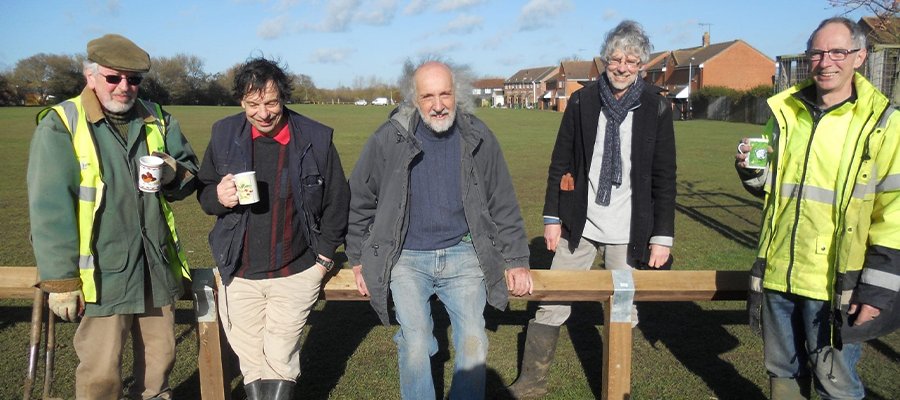
The Witham Tree Group was formed in 2012 by a small group of likeminded residents with the aim of protecting and increasing the tree cover in our town for the benefit of local residents, both now and in the future, and the environment.
Most Recent Posts
- All Posts
- 2018
- 2019
- 2020
- 2021
- 2022
- 2023
- 2024
- 2025
- Blog
- Main
- Our Activities
- Planting
- Play Area
- Tree Talk
- Trees
- Watering Season
Explore Our Services
Lorem Ipsum is simply dumy text of the printing typesetting industry.